The German Westphalian spa town of Meinberg entered the historical record as a spa in 1676, and in 1767 it was officially granted the title Kurort. By 1770, a formal spa park had been laid out, soon followed by the first guesthouses to welcome visitors seeking its mineral waters.
After the Second World War, during the years of the Wirtschaftswunder, spa culture entered its golden age. From the 1950s through the 1980s, a wave of construction brought new hotels and health clinics, embedding the spa into the town’s identity and economy. In its peak year of 1992, Bad Meinberg received 38,000 visitors.
Since the early 2000s, however, the model has faltered. Spa tourism in Horn-Bad Meinberg has steadily declined, leaving many hotels vacant, architectural shells awaiting a new purpose.
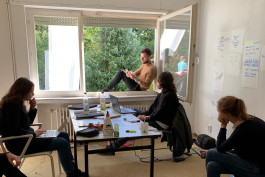
Now, four international teams from the Netherlands, Portugal, Denmark, and Germany will investigate the spa town as a site of transformation. What could a spa resort be in the 21st century? How might abandoned hotels be reimagined, and to what extent can their typology be stretched? Who might choose to live in a town built on the promise of health, leisure, and retreat?
w/ michel melenhorst