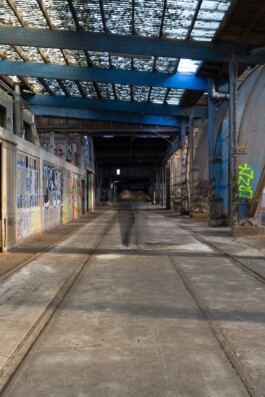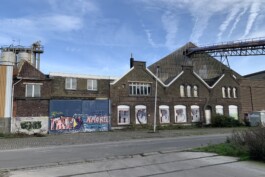
The port area of Ghent around the Triferto building is entering a period of major change, with large-scale plans shaping future housing, businesses, and infrastructure. Yet such re-development often overlooks the subtle qualities of post-industrial sites: their sensory textures, layered histories, and potential to inspire new forms of hope.
This workshop shifts focus to the small scale. The Triferto building is slated for demolition, raising crucial questions: What can be learned from it before it disappears? What should be preserved: physically, materially, or immaterially? Which memories, atmospheres, or spatial experiences should inform the site’s future?
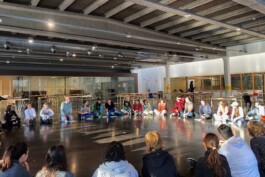
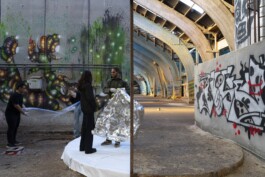
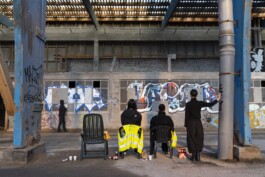
Students from KU Leuven, Ghent (host), Aristotle University, Thessaloniki, and ArtEZ University of the Arts, Zwolle, will work through embodied perception, using the body as a tool to record not only visual information but also smells, sounds, and subtle presences, emotional resonances or traces of other times. This approach values lived experience, treating the body as a means of understanding place.
The workshop also addresses broader urban questions: How can industrial waterfronts become places of hope for humans and non-humans alike? Often seen as empty zones, these landscapes hold ecological, cultural, and emotional potential. Neglect need not signal decline; it can provide fertile ground for new industries, emerging from attention to what already exists rather than top-down plans.

Current redevelopment often follows a transactional logic: replace one function with another. Post-industrial sites demand more: a sustainable, non-transactional approach that considers social, ecological, and emotional dimensions. The students have explored alternative futures, imagining spatial narratives that engage both the body and the building and link material form with sensory experience and cultural memory.
The Triferto building, more than an obsolete structure, becomes a catalyst for rethinking post-industrial landscapes. Through exploration, speculation, and critical reflection, the workshop opens paths toward urban futures of hope, acknowledging what is lost, revealing the unseen, and creating space for possibilities yet to come.
W/ Nadia Kalara, Apostolos Kalfopoulos, Emma Hoette, Ingrid van Zanten and Karel Decker (host).
Photos: Michael De Lausnay